The Farm: An Introduction
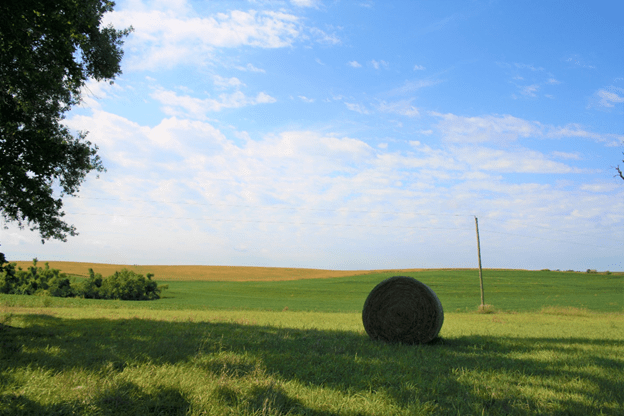
Holt County, located in the far northwest corner of Missouri, is one of six counties that comprised the land added to the state in the Platte Purchase in 1836. (Missouri became a state in 1821.) Before that, the area belonged to Native Americans, specifically the Ioway and the combined Sac and Fox tribes. The tribes received $7,500 for the 3,149 square miles in the deal, which was finalized in 1837. Those two million or so acres are worth billions of dollars today.
The town of Oregon, the county seat of Holt County, sits amidst rich farmland that was part of the Platte Purchase. Its population of around 800 people can drive a couple of miles west to an even smaller town, Forest City, which is near the Missouri River to the west and south. Heading down the large, steep hill into Forest City, you can see the town of White Cloud, Kansas on the other side of the river, near the Nebraska border to the north. Drive about 50 miles up Interstate 29 from Oregon, and you hit the Iowa border. This four-state region is extremely rural, dotted with small towns and villages throughout. The nearest city of any size is St. Joseph to the southeast, with a population of about 75,000.
If you drive north from Oregon on Highway 59 about six miles, you’ll come to an intersection, with Highway 159 heading west and a gravel road to the east. By turning right onto the gravel road and driving about six tenths of a mile, you’ll reach the location where the Masters family farmhouse once stood on the north side of the road. The building is no longer there, but memories of growing up on that small plot of dirt in the far northwest corner of Missouri live on.
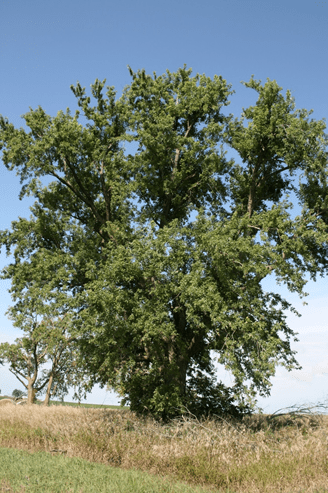
There was a decent-sized front yard, with four trees situated in a rectangular pattern in the approximate corners. Two maple trees stood near the house, and two majestic oak trees dominated the side of the yard nearer the road. Although we spent hours in our childhood climbing those trees, I don’t believe anyone ever broke a bone falling from them, which is amazing.
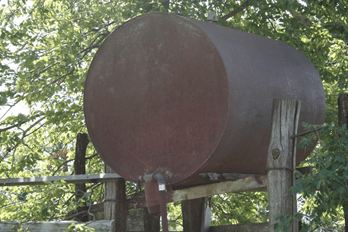
The house was surrounded by 480 acres of rich, black loam. Near the house were barns, implement sheds, a garden, a chicken coop, hog houses, feed lots, a tool shed, an old smoke house, a milk house, and two raised fuel barrels, one for gasoline and one for diesel. A couple of hundred feet to the west sat the house of Dad’s parents, whom we called Pa and Bobo. A flat, grassy area separated the two houses, and Merrill, Jerry, and I spent countless hours playing baseball and football there. It’s even more amazing that none of us broke a bone playing on our sports field, as we were known to play tackle football without pads or helmets.
The two-story house had no air conditioning, and two gas stoves, one in the kitchen and the other in the living room, supplied heat in the winter. Heavy quilts provided warmth in the long, cold months, especially when we became old enough to have our own bedrooms upstairs, which was unheated. Mom and Dad’s bedroom was on the first floor, and a small bedroom, which was reserved for the younger children, sat next to theirs. There was running water in the kitchen, but no bathroom in the house, so the outhouse was easily accessible from the back door.
We raised crops such as corn, soybeans, wheat, milo, and hay. When we boys became old enough, we joined Dad to work in the fields, often from sunup to sundown during the planting, growing, and harvesting seasons.
We also had livestock, such as hogs, cattle, milk cows, chickens, and sometimes sheep, all of which needed to be fed and watered twice a day. So even during the cold winter months, when the farmland lay fallow, there was still plenty to do on the farm.
On first glance, one may think that we were miserable growing up in such austere conditions. However, Mom and Dad provided a warm and loving household. Thanks to Dad’s huge gardens, there was always plenty of fresh, wholesome vegetables. We also had a steady supply of beef, pork, chicken, and eggs to round out the meals. Additionally, as young boys, we had a playground of hundreds of acres where we could explore and play games. We even had a pony, which Ken had won one year in a drawing at the Holt County Autumn Festival. It was like growing up in an amusement park, but without the long lines.
The Family
While this essay is not intended to be a full genealogical history of the Masters family, an introduction to the family might help those who are unfamiliar with the players.
The Adults
- Dad Ray Masters, Jr., the father of the family
- Mom Doris Masters, the mother of the family
- Pa Ray Masters, Sr, Dad’s father
- Bobo Marguerite Masters, Dad’s mother
The Kids
- Ken or Kenny Mom and Dad’s first-born, 1942
- Darith Mom and Dad’s second-born, 1946. The only girl.
- Jack Mom and Dad’s third-born, 1951
- Merrill Mom and Dad’s fourth-born, 1952
- Jerry Mom and Dad’s fifth and final child, 1954
Ray Masters and Doris King met in high school in Maryville, MO, where they both graduated in 1936. Mom worked as a hairdresser in Maryville after graduation, and Dad farmed with his father near Graham, MO. They dated during and after high school, and decided to get married on September 1, 1940, after which they went to Bagnell Dam in central Missouri for their honeymoon. They eventually bought a farm near Oregon, MO and set up a household. Bobo and Pa lived on the farmstead in a small house about 75 yards from the main house.
Why they were called Pa and Bobo
It may seem odd that we called our paternal grandparents Pa and Bobo, so an explanation is in order. When he was learning to talk, Ken developed a lingo of his own. In his language, he decided to name Ray Sr. “Pa,” which is understandable since it’s short for “Grandpa.” However, nobody has ever figured out for sure why he called his grandmother “Bobo.” Mom thought it may have happened when they told him, “Say Bye-bye to Grandma,” he took the “Bye-bye” part and switched it to “Bobo.” At any rate, after that she was always Bobo, or Bobe. In fact, many people in the surrounding area had no idea what her real name was since everyone called her “Bobo Masters.”
Work on the Farm
As mentioned earlier, between growing crops in the fields and caring for livestock, the whole family worked many hours on the farm. Dad prepared the fields by plowing and discing, planted crops such as corn and soybeans, applied fertilizers and weed killers to the growing crops, cultivated, and eventually harvested. Before and after working in the fields, he also fed and watered the livestock, milked the cows, and did any other chores as needed. When we boys were old enough, we got to participate in these activities. The workload was lessened in the wintertime, but it seemed as if there was always something to do: a fence needed repairing, hogs need to be sorted and taken to market, cattle needed to be vaccinated, and so on.
Mom, Bobo, and Darith also worked all day and into the night. They took care of everything around the house including laundry, cooking, baking, canning vegetables such as corn and green beans, dressing chickens, picking vegetables from the garden, weeding the garden, gathering eggs, sewing, and many other chores I’m forgetting. Mom also took the time to read to her kids when they were young, impressing upon all of us the value of books and education. (She always said that education is something no one can ever take away from you.) She was always ready to listen and talk when any of us kids needed to do that.
Additionally, Bobo and Pa worked on the farm, although as he got older, Pa had a hard time walking, and could only do so with two canes. I remember him driving a tractor and working in the fields when I was quite young, but during most of my childhood he was unable to do so. Instead, he helped by driving us when needed. Maybe he’d shuttle us to Brown’s Curve and treat us to ice cream, Big Lake for watermelons, or Maryville for music lessons. He was a wise man, who tried to instill a sense of dignity and respect for hard work in his grandchildren. Bobo was like a second mother. She helped Mom with household chores, and was always available to babysit if Mom and Dad needed to go somewhere. She tried to civilize us kids as much as possible, which was no small task. Even though we complained, she insisted we watch the Lawrence Welk show on the small black-and-white TV every week. She was always there for us, and truly cared about her grandchildren.
Dad’s Garden
Another important part of the farm was Dad’s vegetable gardens. They were the stuff of legends. In fact, Mom sometimes thought he planted too much, especially since she would spend so much time in the hot sun hoeing weeds while Dad worked in the fields. In the wintertime, though, it was common to see Dad sitting in a chair with his reading glasses perched on the end of his nose, perusing the Burpee or Earl May catalogue as he dreamed of planting the perfect garden in the Spring. I truly believe he was amazed that he could insert a small seed in the ground in spring, and from that seed would emerge an item that would be nourishing and rewarding, such as a ripe, juicy, deep-red tomato or an ear of sweet corn. I don’t believe he ever lost that sense of awe. At any rate, he loved planting a huge garden.
So, in early spring, he would spend hours preparing the ground for planting. Then, using twine strung from stakes, Dad ensured the long rows were straight, even though the joke was you could plant more in a crooked row. With the whole family participating in this ritual, planting finally began. Of course, the process was repeated as spring continued, since some vegetables, such as lettuce and radishes, were planted early, and others later. The list of freshly grown vegetables included sweet corn, tomatoes, potatoes, green beans, peas, radishes, cabbage, zucchini, leaf lettuce, green onions, bulb onions, carrots, celery, squash, pumpkins, watermelons, cantaloupes, beets, and a few other items I’m forgetting. The garden then provided an abundance of wholesome vegetables all summer long, and Mom spent hours canning the excess, which allowed us to enjoy summer’s goodness even during the cold winter months.
I probably complained more than any of us kids about working in the garden. It was oftentimes hot, dirty, sweaty labor, and I surely didn’t appreciate the results at the time. I regret not learning about gardening from Dad, but digging potatoes in the roasting sun didn’t seem like anything I’d want to do as an adult. My few feeble attempts in adulthood at growing tomatoes would undoubtedly embarrass Dad.
Butchering
In addition to fresh vegetables, we always had a steady supply of meat such as beef and pork. When the supply ran low, Dad would pick out a steer or hog for butchering. A local butcher came to the farm, his pickup rigged with a rack and hoist on the back. After killing the animal, the butcher hung it by the back feet, then proceeded to dress it. The large pieces of meat were than taken to town for processing and packaging. After the meat was processed and frozen, Mom and Dad brought it home and placed it in one of their freezers. Mom made good use of that supply, often fixing hamburgers on Fridays and roast beef on Sundays.
Chickens
Every spring, Mom and Dad bought a couple of hundred baby chicks. They were yellow and cute when they were young, but became ugly (I thought) as they developed into white pullets. When they became fully grown, we began the task of butchering and dressing the chickens. For several days, the process went something like the following:
After breakfast, we’d all go outside, where Bobo had a large kettle of water boiling. Dad would snag a chicken, then use a corn knife (similar to a machete) to chop off its head. The body of the chicken then flopped around for several minutes, while Dad grabbed the next chicken. We usually processed eight chickens in the morning. After the chickens quit flopping, we would pick one up by its feet and dunk it into the steamy water. Then came the fun part: plucking the wet, soppy feathers off the bird. The soggy feathers clung to your hand as you plucked, and it seemed like the pin feathers did not want to leave the carcass. It was not the most pleasant way to begin the day, but Mom’s fried chicken made up for it.
After the rest of us went to work in the fields or, when we were young, played outside, Mom spent the morning dressing the eight chickens, usually cooking some of them for dinner, the noon meal. The rest she put in the deep freezer to supplement the beef and pork. After dinner, we would often kill another eight chickens, and Mom would dress those in the afternoon.
I’m sorry, Colonel Sanders or any other famous fried chicken chefs, but Mom made the best fried chicken ever, hands down. It was moist, perfectly cooked, and the crispies on the outside were scrumptious. I think her trick was using an electric skillet and lots of lard along with Crisco. She got enough practice, since it seems we had fried chicken nearly every day in the summertime, and often throughout the year. I don’t think any of us ever got tired Mom’s fried chicken.
Mom and Dad also kept a smaller brood of hens, which supplied a steady stream of eggs. Once a day Mom or Bobo headed to the chicken coop with a yellow, wire basket to gather eggs. The chickens were free to roam about the backyard in the daytime, so I guess we were eating free-range eggs before they became popular. When we were young, we learned to stay away from the rooster since he was known to chase us around the yard.
Dinner and Supper
In the summertime, dinner, the noon meal, usually included fried chicken, beef, or pork, along with dishes such as mashed potatoes, green beans, corn, tomatoes, lettuce, radishes, Jello salad, and other items, and was always followed by dessert, usually cake or pie. It was almost like eating a Thanksgiving meal every day, but we tended to burn a lot of calories working or playing. Also, none of the excess was ever wasted. It was wrapped up and put in the refrigerator, then often became supper, the evening meal.
Mom usually didn’t have to cook much for supper during the summer months, except for warming food. Since microwaves had yet to be invented, it was a bit more work than would be required nowadays, but it allowed Mom to have a more relaxed evening. Many times, we just ate a light, cold supper. Mom’s leftover fried chicken tasted great even when it wasn’t heated.
Some of my favorite memories are when we ate supper outdoors. Since it was so hot and muggy, the house became virtually unbearable at times. Instead of staying in, Mom, Bobo, and Darith would carry the leftovers to a picnic table between the two houses, where we’d enjoy the meal al fresco. As the sun lowered in the west and lightning bugs began their dance, a cool breeze might roll in. The adults sat around talking after supper, but Merrill, Jerry, and I would run around the yard, playing games. We also had a fire ring, and sometimes we’d have a campfire of sorts, and Mom would bring marshmallows for dessert. As it became darker, the bright lights of the Milky Way scattered across the sky. Since we were out in the boonies, there was virtually no light pollution. It was a quiet, peaceful way to end a day of hard work or play.
Eventually, we all helped carry food and dishes back into the house. If it was early enough, we’d watch the small black and white tv in the living room, but often we young boys were so tired that we soon fell asleep. However, if it was one of those oppressive summer nights, we didn’t sleep in the house but headed to the front porch.
Sleeping on the front porch
Dad had placed an old set of bed springs on the front porch, and on those hot nights, he would sleep there. I believe Mom and Darith usually stayed inside, preferring the comfort of their beds, but we boys thought it was an adventure and joined Dad on the porch, where we’d curl up in sleeping bags. We didn’t have air conditioning, and now that I look back upon it, I’m glad we didn’t. Those nights on the porch with Dad were quiet and peaceful, with cicadas signing as we drifted off to sleep.
Farm Sale
In 1971, the folks sold the farm near Oregon and moved to a ranch house on 40 acres near Pickering, MO, which is a few miles north of Maryville. At the new farm, Dad and Jerry built a successful purebred hog operation, and became renowned hog breeders. Dad continued growing his gardens, and Mom took a job at the university in Maryville. They lived there until the mid-80s, when they moved to Arkansas, where they spent the rest of their lives.
At the time of the Oregon farm sale, I was away at college, and all the kids had moved out of the house except for Jerry. It was sad, but understandable. The houses and buildings are long gone, and the land where they stood has been plowed under and used to grow crops. Although the physical buildings no longer exist, memories of growing up on the Masters family farm live on.
January 2021
© Jack Masters 2021
816-405-2589
 Masters Family Stories